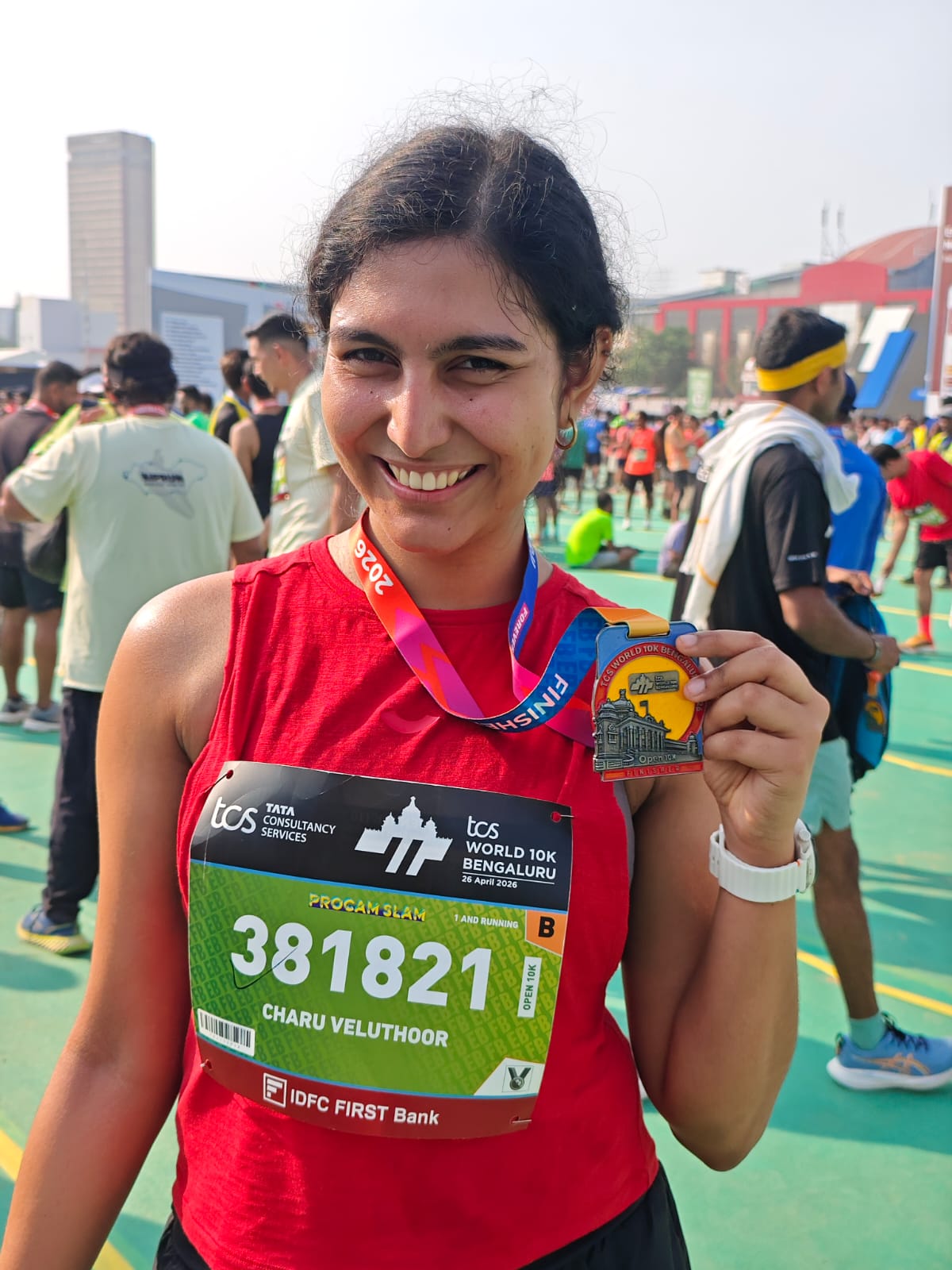
My period went irregular a few months after I came back to being active. It took long enough that I didn’t connect the two things at first. I’d had an 18 month hiatus, and coming back I was training properly again, eating what I thought was enough, doing everything the way I’d always done it. Then my cycle went irregular, and stayed that way.
So I did what you’re supposed to do. I got the blood work. I got the hormone panel. I got an ultrasound. I sat across from my doctor and heard that everything looked fine, that there was nothing to worry about, that on paper I was completely normal. And I remember leaving that appointment feeling something I didn’t expect, which wasn’t relief. It was closer to frustration. The timing lined up too neatly with my return to exercise for it to be a coincidence, and being told the tests were clean didn’t make the thing I was experiencing stop happening.
That’s when I started actually reading.
Doing what everybody else did
Here’s the part I find harder to write. For most of the time I’ve been running, I did what the people around me did. My training, my fuelling, my recovery, whether I ate before a morning run, all of it was more or less absorbed from whoever I was working out with, who were mostly men.
And I never questioned it. On the road, I don’t want to be reminded that I’m a woman. I’ve spent a lot of my life trying to be faster, stronger and better than men around me, and there’s a particular kind of pride in keeping up, without adding any if and but’s. Asking whether something applies differently to me, would have felt like asking for an excuse. So I hid the risk of sounding stupid, and I just did what they did.
The other thing is that I don’t know any female athletes closely. Not the kind of closeness where you’d text someone and ask whether their cycle went weird when they upped their mileage, or whether they eat before a long run, or whether any of this has happened to them too. I had nobody to ask. So the question just sat there unasked for a long time, until my body asked it for me.
What I found
What I found when I went looking was not a specific answer about my body. It was something more structural, and honestly more annoying.
There’s a 2021 paper “Invisible Sportswomen”, by Emma Cowley and colleagues. They went through 6 major sport and exercise science journals, everything published between 2014-20, with 12.5 million participants.
31% of the papers studied men only. 6% studied women only. That’s 5 male-only studies for every female-only one.
The reason that gets given for this, and I had to sit with this one for a minute, is that the menstrual cycle makes women complicated to study. Hormones fluctuate, so you’d have to control for cycle phase, so it’s expensive, so researchers use men and treat that as the default. Which means the exact thing that makes my body different from a man’s is the reason nobody studied it. And then the findings from studying men got handed to me as though they were blanket statements.
The thing that was probably actually happening
The research that came closest to explaining my own situation is about something called low energy availability. The foundational study is Loucks and Thuma, 2003. They took 29 women with regular cycles, controlled their food and their exercise precisely, and found a threshold: around 30 kilocalories per kilogram of lean body mass per day. Above it, the hormone pulses that drive the menstrual cycle carried on normally. Below it, they started to break down.
The important thing, and this is where most people get it wrong is the number isn’t how much you eat. It’s what’s left after training: everything you’ve eaten, minus what the session burned, divided by your lean body mass. Whatever remains has to fund every other thing your body does. Your hormones, bone, immune function, all of it.
I ran my own numbers, which I’d somehow never done in 2 years of running. At 66kg and roughly 31% body fat, my lean mass is about 45kg, which puts my threshold somewhere around 1,350 calories. My watch says I burn around 820 calories on a normal day. So to stay above the line I’d need to be eating roughly 2,200, every day, before I’ve done anything unusual. And I know for a fact I wasn’t counting, and I know the days I felt proudest sadly were the ones where I’d trained hard and eaten as usual.
That’s the part that got me. You can be weight-stable, eating what looks like a completely sensible amount of food, and still fall under the line. Which is roughly, I suspect, what I did when I came back after 18 months off and tried to pick up where I’d left off.
The question I couldn’t get answered
The obvious follow-up, once I understood the energy availability thing, was about timing. Say I eat my 2,200 calories. Does it matter when? Because the run I do most often is the one straight out of bed.
There are real sex differences here. Women burn proportionally more fat and less carbohydrate than men during exercise, and the drop in blood glucose during a fast is steeper in women than in men. Both findings are well established.
What I could not find is the part I actually wanted: whether training fasted does anything to your hormones if your total intake for the day is adequate. There is an enormous amount of content asserting that it does. Almost all of it, when I followed it back, ended at a coach or a brand rather than a study. And there’s a version of me that would have accepted it happily, but not this one.
Then I found a clinical trial that is, right now, actively recruiting to test exactly this - Fasted prolonged exercise, energy availability held at or above the threshold, measuring reproductive hormones and cycle length.
Which means nobody knows yet. In 2026. This is not an exotic question, it’s should women eat before a morning workout, and it is currently an open trial rather than a settled fact.
The usual explanation you’ll be given is about cortisol. That training fasted spikes your stress hormone, tips you into a catabolic state, and that a small pre-run snack blunts it.
What I can tell you is what happened to me. I eat a small thing before I run now - half a banana, a slice of bread, something very lite, and I do feel better. My cycle has been better too, though I changed several things at once and I’m not going to pretend I can isolate which one did it.
I’m one person. That proves nothing. But I’d rather say that, plainly labelled and I’d rather not be the experiment while the actual experiment is still recruiting :D
The question I actually wanted answered
The thing I couldn’t stop circling back to: what if you want to lose weight? Plenty of us, are also trying to get lighter, and nobody wants to be told the answer is simply don’t.
This is where the research gap bites hardest, though. Almost all of the weight-loss literature is male. How should a woman lose weight without wrecking her cycle is a question a lot of us have and one nobody has really looked at, so everything above is assembled from adjacent findings rather than read off a study. Which is, again, the whole problem.
What worked for me
I stopped taking training advice as universal by default. The question I try to ask now is: was this ever tested on a body like mine? For a surprising amount of standard advice, the answer is no, or nobody checked, or it was checked once in 19 male university students.
I eat before I workout now, and I’ve stopped treating that as a weakness. I pay attention to whether my intake has kept up when my activity goes up, which is a different question from whether I’m eating a normal amount of food. And when my cycle tells me something, I treat it as information about my training rather than an unrelated inconvenience.
The thing I’d most like to change, though, is the part where I didn’t have anyone to ask. That’s the piece the research gap can’t fix. So, partly, that’s why this is here. If you’re a woman who runs or swims or is generally pretty active, and something in your body has gone quietly sideways since you started training harder, and your tests came back fine, it might not be nothing.